App Onboarding
Part of Mobile referral programmes
Designing referral sharing without exposing private contacts
Design a referral share flow that lets users choose where to share without importing contacts, while keeping links and conditions clear.
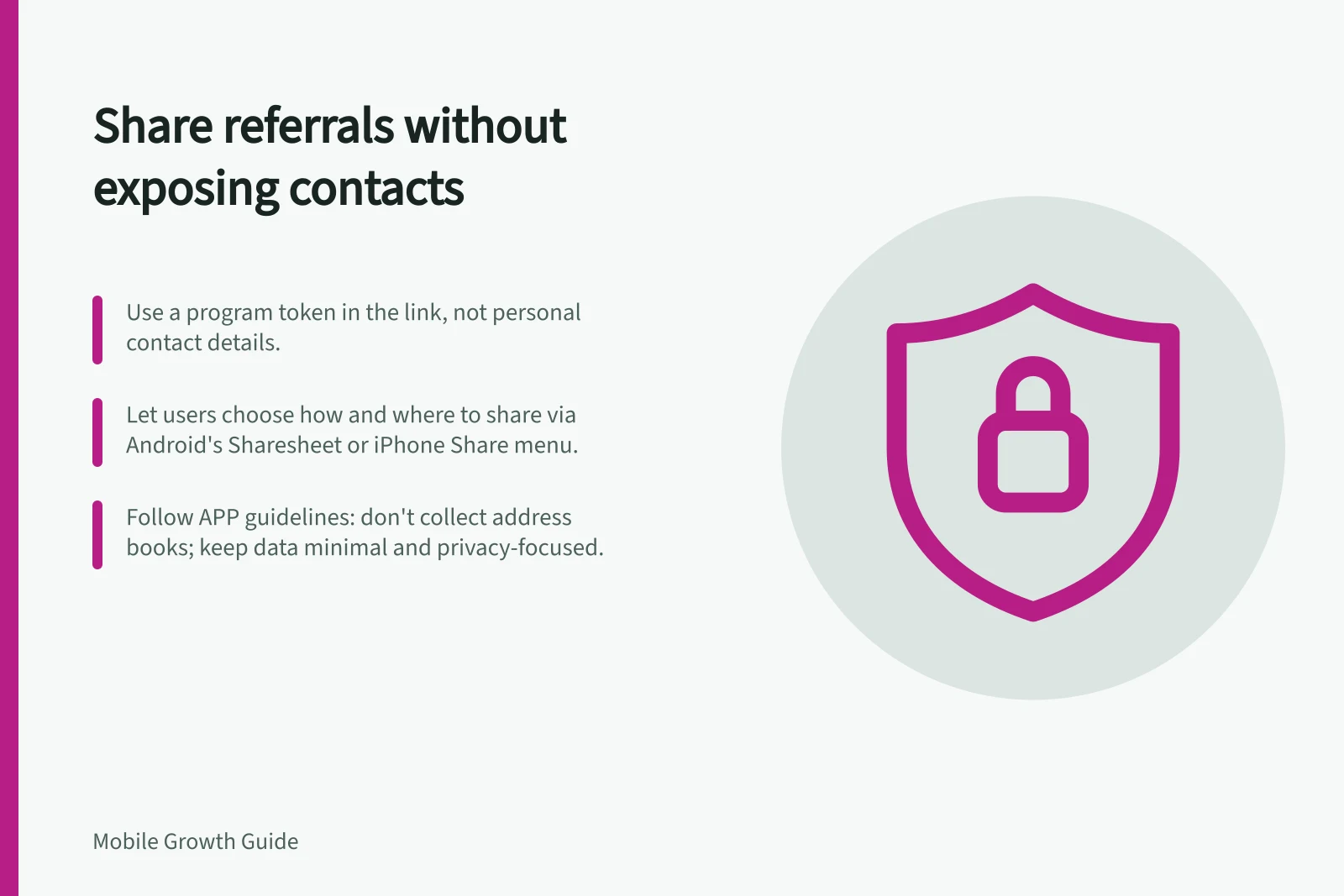
Let a user share a referral invitation without the app reading, uploading or storing their address book. Show a clear message and a link or code, then let the user choose whether and where to send it. The program can recognise later use of the link without collecting the sender's entire contact list.
Keep sharing under the user’s control
Show the proposed text and destination before the share action. Let the user edit the message where the receiving app supports editing. Explain the benefit and its main conditions without implying a personal endorsement the sender has not seen. Do not preselect a recipient or send automatically.
Android's Sharesheet can present compatible apps for shared text such as a URL. An iPhone Share menu also lets a user choose sharing options. These controls offer a route that does not require the referral app to import contacts. Available destinations and final message handling vary by device and receiving app.
A copied link lets the user paste it later. Opening a share menu or copying a link does not prove delivery, reading or acceptance. Record those as sharing activity, not successful referrals.
Put limited information in the link
Use a program token rather than a friend's email address or phone number. The token can associate a possible referrer with a later eligible action, but a message may be forwarded beyond the sender's intended recipient. Apply eligibility and reward limits through the program rule, not an assumption about who received the message.
Show the recipient an accurate landing page before asking them to install or sign in. Explain any account, location, expiry or completed-task condition there. A referral link should not reveal one person's private account details or reward status to another.
Avoid collecting an address book for convenience
A contact list can reveal information about people who have no account with the app. The Office of the Australian Information Commissioner publishes a mobile privacy guide aimed at mobile app developers.
For organisations covered by the Australian Privacy Principles, collection of personal information must also meet applicable reasonable-necessity and fair-means requirements. A share flow that does not import contacts reduces the third-party information the program handles.
If a contact-picker feature is proposed, identify what information the app receives and retains and why. Review that design on its own terms. Broad contact access should not be a condition for using a functional referral link.
Privacy Compliance & Best Practice Guidelines
- Australian Privacy Principles (APP)
- Require reasonable necessity and fair means for collecting personal information.
- Mobile Privacy Guide
- Published by OAIC for mobile app developers to protect user privacy.
- Spam Prevention
- ACMA advises against unsolicited bulk messages; respect recipient choice.
Distinguish personal sharing from business messaging
A user choosing to send a message through another app and a business sending invitations to collected addresses are different arrangements. The Australian Communications and Media Authority publishes guidance on avoiding sending spam.
Let recipients ignore an invitation without triggering business follow-ups merely because someone shared their details. Show senders only the program status needed to understand a reward, without disclosing an invitee's unrelated activity.