App Analytics
Part of Deep links and app destinations
Deferred deep links versus ordinary deep links
An ordinary deep link takes someone who has the app to a specified screen. A deferred deep link also tries to carry the intended destination through an install so …
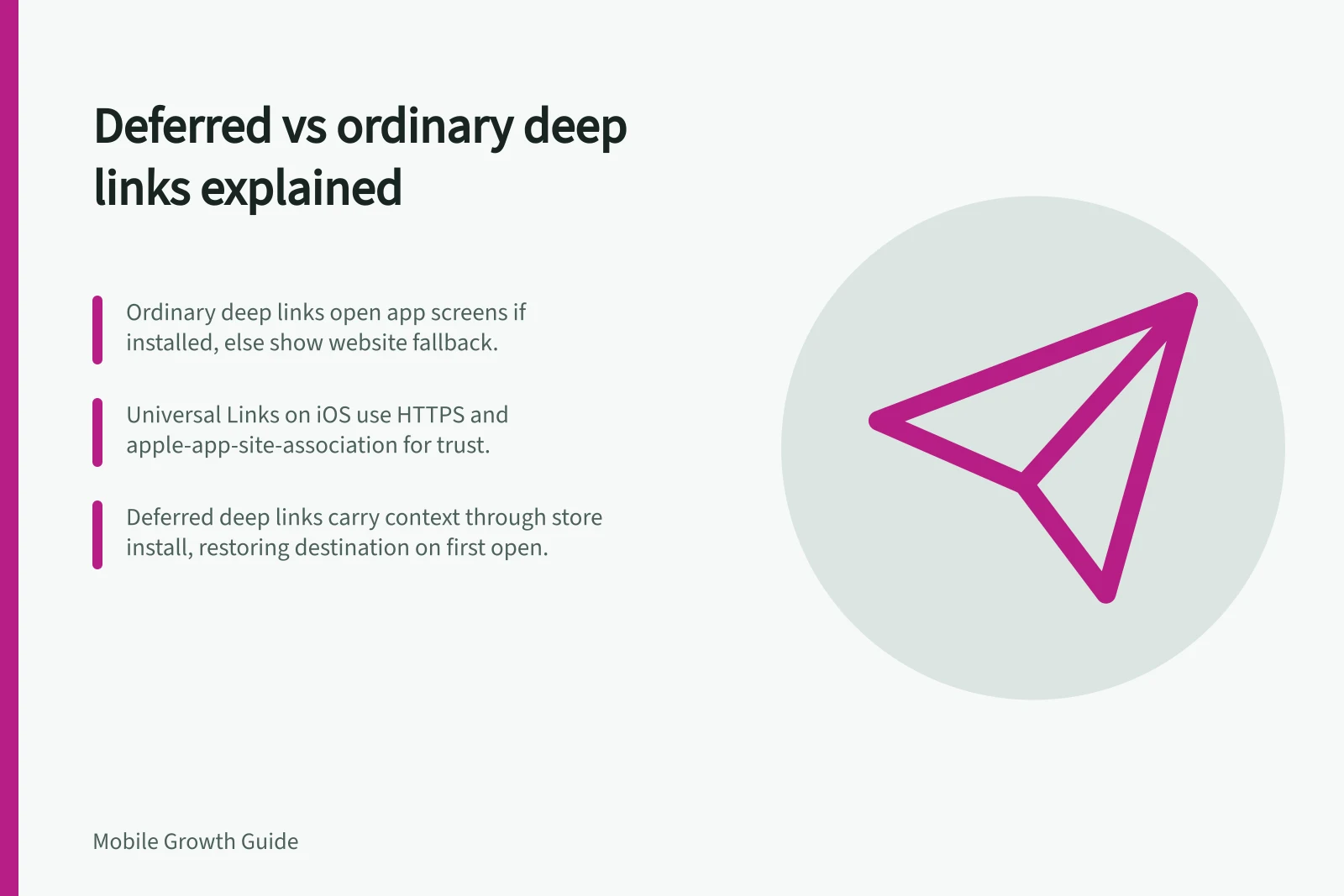
An ordinary deep link points to a particular screen or state in an app. When the app is installed, an OS-recognised link can open that destination; when it is absent, a website fallback does not itself carry the original app destination through installation.
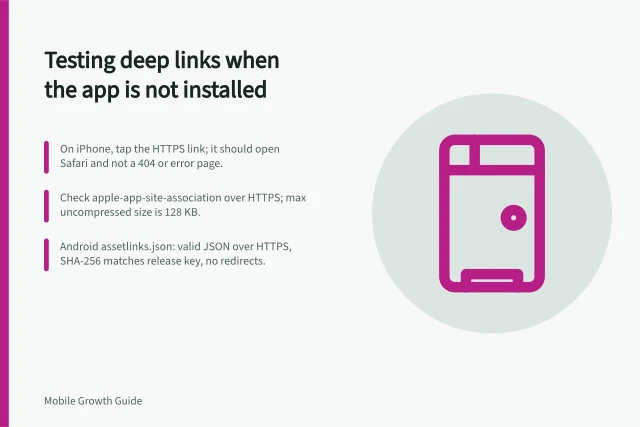
On Apple devices, Universal Links use a website’s HTTPS URL and a trust association between the site’s apple-app-site-association file and the app’s associated-domains entitlement. On Android, verified App Links use intent filters and a Digital Asset Links assetlinks.json file. If the app is absent, the website opens in Safari or on the web.
Android’s normal, user-managed deep linking is available on all Android versions and devices; verified App Links are available on Android 6 and later with Google services. Dynamic App Links add on-the-fly rule changes from Android 15 (API level 35), also on devices with Google services.
A deferred deep link adds a post-install hand-off: it carries the click context through the store installation, then restores the intended destination on first app open. That is different from an ordinary link’s website fallback, which does not by itself resume the app journey.
Android has a path for the hand-off through Google Play Install Referrer. iOS does not provide direct OS support for bridging the App Store install gap, so a service or middleman is needed; deferral is not a built-in capability shared equally by both operating systems.
Detour is a named implementation: it uses Universal Links on iOS and App Links on Android for users who already have the app, and identifies a middleman as necessary to bridge a browser click to first app open. Deferred-link solutions can also retain the original link and campaign source for attribution.
Firebase Dynamic Links is no longer an option: the service shut down on 25 August 2025, and its links stopped working. Firebase cited ecosystem changes that made it difficult to provide a consistently stable post-install transition.
Use ordinary verified links when opening the installed app and offering a web fallback are enough. Choose a deferred hand-off when the destination must survive a store installation; it adds a platform-specific hand-off and service dependency, while Universal Links and App Links provide verified domain routing without that extra step.
Ordinary vs Deferred Deep Links: Key Differences
- App InstalledDirect app open via Universal Links (iOS) or App Links (Android)
- App Not InstalledWeb fallback (iOS) or web page (Android); no post-install hand-off
- Post-Install DestinationNot preserved in ordinary links
- Deferred Deep Link CapabilityYes – carries context through install and restores destination on first open
- Platform SupportiOS: requires middleman service; Android: uses Google Play Install Referrer (API level 6+ with Google services)
- Attribution RetentionDeferred links can retain campaign source and original link context
Platform-Specific Requirements for Verified Deep Links
- iOS: Universal Links Required
- apple-app-site-association file + associated-domains entitlement
- Android: Verified App Links
- Digital Asset Links assetlinks.json + intent filters (Android 6+ with Google services)
- Firebase Dynamic Links Status
- Deprecated as of 25 August 2025 – no longer functional